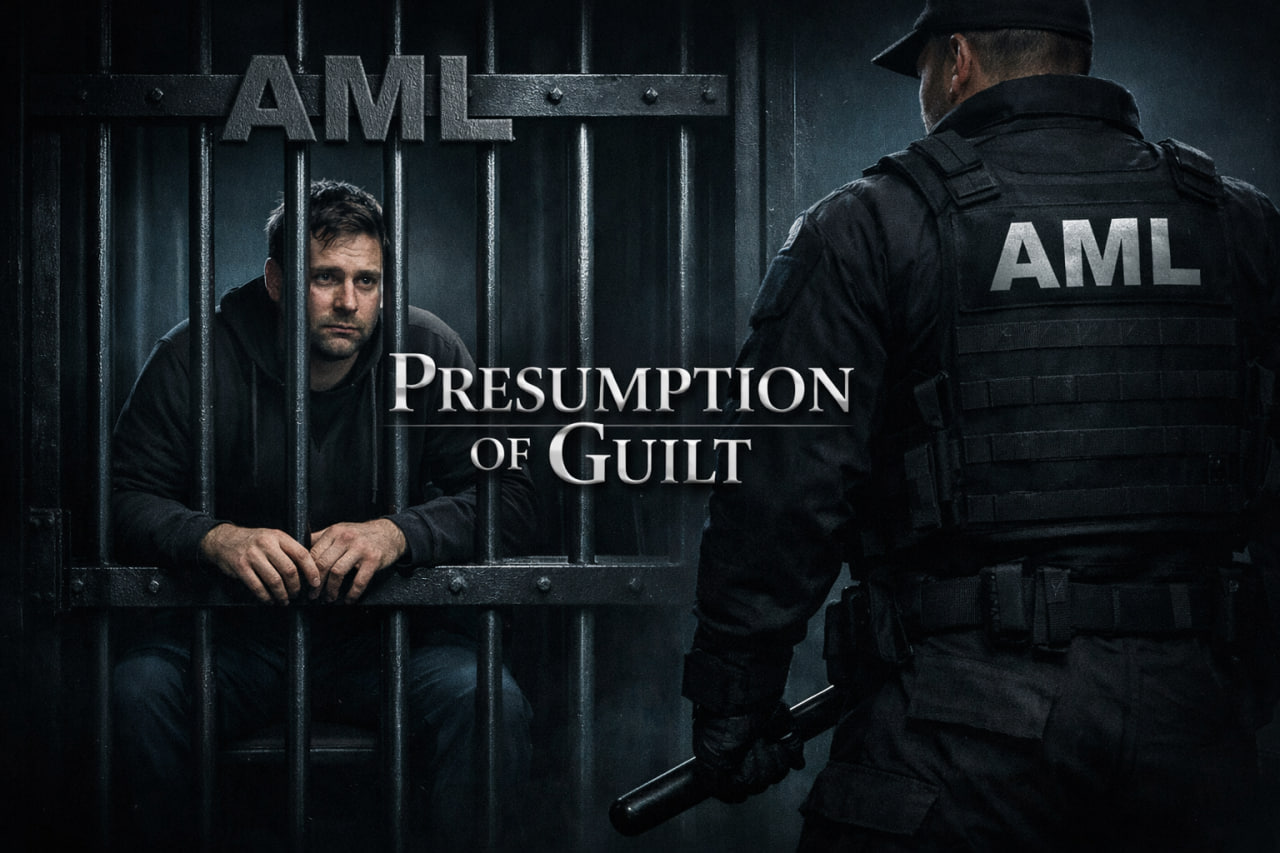
Crypto has developed an unpleasant norm: even a legitimate user can face account restrictions if their deposit appears risky to an exchange. The reason is not always the person behind the funds. A questionable wallet history, an unfortunate counterparty, or a transfer path that looks suspicious to the system can be enough.
An exchange does not assess a user’s intentions. It assesses the origin and route of funds. If a transfer raises questions, the platform would rather stop the operation and request an explanation than allow an asset with a doubtful trail to pass through. That is why many users feel that in crypto, suspicion comes first and explanations come later.
Why Ordinary Users Get Caught by AML Freezes
A compliance team looks at the address, the history of incoming and outgoing transfers, links to high-risk wallets, the type of counterparty, and the overall profile of the transaction. If the system detects a direct or indirect connection to sanctioned entities, darknet markets, ransomware, fraud schemes, stolen funds, or services designed to conceal transaction history, the deposit can be sent for additional review.
Each exchange has its own internal thresholds. One platform may let the transfer pass without issue, another may send it to manual review, and a third may restrict the account immediately. To the user, this can look arbitrary. To the platform, it is standard protection against regulatory risk.
That is why freezes often affect not only people who knowingly stepped into the gray zone, but also those who received coins through an old wallet, an over-the-counter deal, a transfer from a third party, or a long chain of intermediate addresses.
How AML Filters Work on Crypto Exchanges
Checks usually happen in stages. First, the system analyzes the address and the transfer itself. Then it assigns a risk level across different categories: sanctions, fraud, stolen funds, darknet exposure, ransomware, mixer-related activity, indirect links to problematic addresses, and other warning signs.
After that, the exchange applies its own rules. One transfer is credited without questions. Another is sent to manual review. A third leads to account restrictions until the user confirms the source of funds.
For the account holder, the conclusion is simple: what matters on an exchange is not an attempt to hide the route, but the ability to explain it clearly. The more understandable the history of the funds, the easier it is to pass a review.
Which Actions Increase Risk the Most
The most obvious risk is contact with sanctioned addresses and sanctioned entities. For an exchange, that is almost always a hard red flag.
The next group includes funds linked to darknet markets, ransomware, fraud schemes, or stolen assets. Even if the user was never involved in illegal activity, they can still receive problematic coins through an old address, an intermediary, or a counterparty.
Services that conceal transaction history and complex multi-step routes also raise concern. When too many links appear between the starting point and the exchange, the history of funds becomes harder to explain. For the user, this may look like an attempt to preserve privacy. For the exchange, it looks like an attempt to make verification harder.
Random moves across networks, bridges, and exchange services do not help either if they only add noise to the transfer history. The more complicated the route, the higher the chance that the transaction will end up in manual review.
Why Classical Privacy Tools Have Come Into Conflict With Exchange Compliance
The right to financial privacy has not disappeared. But on regulated exchanges, the priority is different: the platform must understand where the funds came from and whether it can defend that origin before a regulator.
That is why tools that hide or complicate the history of coins have come to be seen as an additional source of risk. Even if a user acts not out of criminal intent, but out of a desire to avoid revealing too much personal information, an exchange looks at that transaction through the lens of verifiability and proof.
That is where the conflict begins. The user wants less transparency for outsiders. The exchange wants more clarity for its compliance team. In practice, the exchange almost always has the stronger position.
Procedure: Before the Transfer, During the Transfer, After the Deposit
Before the transfer.
Check the address, the wallet history, and the counterparty in advance. If the funds are going to a regulated platform, it is better to understand early whether the route has any clear problems. At the same time, it makes sense to prepare proof of the source of funds: transaction history, exports from old exchanges, trade confirmations, and other supporting records.
During the transfer.
Do not complicate the route without a real reason. Extra intermediate addresses, unnecessary moves across networks, transfers through third parties, and random exchange services do not help. They only make the story harder to understand.
After the deposit.
Keep supporting records from the start. Transaction IDs, exported activity logs, screenshots of transfer history, and proof of a deal with a counterparty are all better collected in advance, not under pressure after an exchange sends a request.
Typical Situations
Situation 1. You transferred funds from an old personal wallet and received a request from the exchange.
The main mistake here is giving vague answers. It is much better to show where the coins came from, how long they were held in that wallet, which transfers connect that address to you, and why the funds were sent to the exchange at this particular time.
Situation 2. The funds came from a third party or through an over-the-counter deal.
In that case, the exchange evaluates not only you, but also the counterparty. If the origin of the funds on the other side looks doubtful or poorly documented, a review is almost inevitable. This is where transaction documents, a clear economic reason for the transfer, and a clean counterparty history matter in advance.
Situation 3. Before the deposit, you tried to further obscure the route.
That step usually makes the situation worse. For a regulated platform, a direct and understandable transfer with a transparent history almost always looks better than a complex chain with unnecessary links.
What to Do If the Exchange Has Already Restricted the Account
The first rule is not to create new versions of the story or add confusion. If the exchange asks for proof of the source of funds, it does not need a general statement about personal savings or old crypto holdings. It needs a clear timeline: where the asset came from, which addresses it passed through, and why it ended up on that platform.
The second rule is to stay dry and factual. A compliance team is not discussing the philosophy of privacy. Its job is to reduce the exchange’s risk. That is why documents, dates, amounts, addresses, and a consistent transfer history matter more than emotion.
The third rule is not to combine several unrelated stories in one response. If your route involved an old exchange, a personal wallet, an over-the-counter deal, old holdings, and transfers across different networks, all of that needs to be laid out in order and without logical gaps.
A good response to a compliance team is not an excuse. It is a carefully reconstructed route of funds.
How to Build This Into a Trader’s Workflow
For a trader, trade risk management is not the only thing that matters. Operational discipline matters too. When one account mixes personal transfers, test transactions, over-the-counter purchases, random wallets, and trading turnover, the chance of a compliance review rises sharply.
If trading has a separate funding route, a separate account or subaccount, and a clear transaction history, that structure is easier to defend. This is no longer just a matter of convenience. It is part of basic operating discipline.
From a practical standpoint, the logic is simple: the cleaner the path of funds before they reach the exchange, the less unnecessary noise surrounds the trading activity. No screener, no bot, and no strategy can replace basic financial hygiene.
FAQ
Can you get frozen just for sending funds from a personal wallet to an exchange?
Yes. The problem is not the personal wallet itself, but its history and the route of funds.
Do long transfer chains and moves across different networks reduce the risk of a freeze?
Usually not. They more often make the source of funds harder to explain and increase the chance of manual review.
What does an exchange usually ask for during this type of review?
Most often it asks for proof of the source of funds: deposit history, information about external wallets, records from other platforms, transaction documents, and an explanation of the transfer route.
If regulators softened their position on certain privacy services somewhere, does that mean the issue is closed?
No. The overall attitude of major exchanges toward opaque routes and transactions with concealed history remains strict.
What is the most important practical step for an ordinary user?
Do not try to make the route invisible. It is far more useful to make it understandable, logical, and supported by documents.
Conclusion
Crypto exchanges have long operated not under a presumption of innocence, but under a presumption of risk. It is an unpleasant reality, but that is how the market works today.
That is why user protection begins not with trying to hide the route of funds, but with organizing that route properly. The fewer unnecessary links there are, the cleaner the wallet history, and the faster the origin of the asset can be confirmed, the lower the chance of getting stuck in a long compliance review.
Risk disclaimer: this material is for informational purposes only and does not constitute legal advice. AML, KYC, and sanctions compliance requirements depend on the jurisdiction, the exchange, and the specific route of funds.